

Single vs. Twin Tank Water Softeners: Complete Comparison Guide
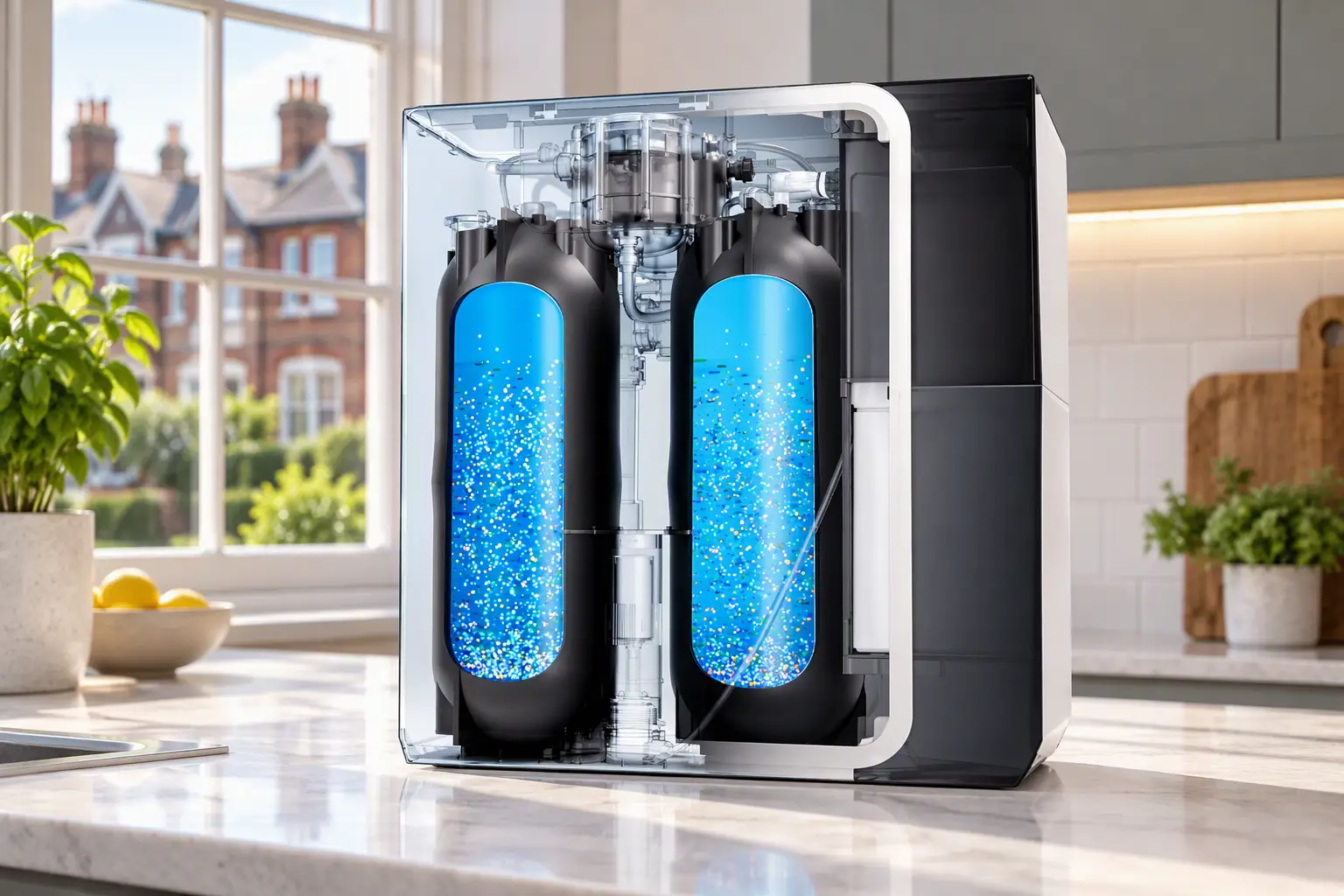
Quick Answer: Single-tank water softeners interrupt the supply of softened water during regeneration, meaning they cannot provide true 24/7 softened water for your home. A twin tank (dual cylinder) softener uses two tanks working together – while one cleans, the other continues supplying soft water. For UK homes, twin tank systems offer 24/7 continuous soft water, higher flow rates for busy households with high water flow, and up to 50% lower salt usage, fully offsetting their higher initial price tag over time. Harvey twin tank softeners are KIWA and WRAS approved and carry fully audited Made in Britain accreditation.
Single vs. Twin Tank Water Softeners at a Glance
When choosing a water softener, understanding the difference between single and twin tank (dual tank) systems is essential.
- Single Tank Softeners: Contain one resin tank. When the unit cleans itself (regenerates), softened water shuts off or pauses. They are larger, harder to calibrate, and often use more salt and water than necessary.
- Twin Tank Softeners: Feature two resin tanks working in tandem. One tank softens your water while the other regenerates, guaranteeing continuous, 24/7 softened water with no downtime.
| Feature | Single Tank Water Softeners | Harvey Twin Tank Systems |
|---|---|---|
| Soft Water Availability | Pauses during regeneration – home will still have hard water | 24/7 continuous supply (zero downtime) |
| Power Source | Requires an electrical socket (under sink or nearby) | 100% non-electric (water-driven displacement meter) |
| Installation Requirements | May require an electrician and a plumber | Plumber-only installation (no electrical work needed) |
| Salt & Water Efficiency | Timer or capacity-based; often less efficient than twin demand-driven systems | Up to 50% salt savings via precision metering |
| Flow Rates | Drops during peak household demand | High flow rates (duplex parallel design) |
| Certifications | Varies by manufacturer and model | KIWA certified and WRAS approved; fully audited Made in Britain |
| Physical Size | Bulkier; larger single tank | Compact; designed to fit standard UK kitchen cupboards |
| Typical Price Range | £600 – £700+ (upfront cost) | £1,300 – £2,500+ (upfront cost) |
| Long-Term Value | Higher running costs over time | Lower salt/water consumption offsets the initial premium |
How Single vs. Twin Tank Systems Work
A water softener has two main jobs: softening your mains water and cleaning itself through regeneration. How a system handles these two tasks dictates its performance.
Twin-tank systems work differently: While one cylinder regenerates, the second cylinder continues to supply softened water to the home. This design helps ensure a continuous supply of softened water, even during regeneration cycles.
The Limitations of Single Cylinder Softeners
All single tank softeners can only perform one job at a time. They can either soften your water or clean themselves—they run into issues when attempting to do both simultaneously.
- Water Interruption: A single tank softener takes around 12 minutes to clean itself. If regeneration triggers while you’re showering, running a bath or using the washing machine, hard water passes straight into your pipes for that time.
- Efficiency Loss: Because single cylinder units rely on timer-based estimations or simple controls, they often regenerate prematurely or too late, consuming excess block salt and flushing unnecessary water down the drain.
The Twin Cylinder Advantage
A twin tank system removes performance trade-offs. Using a smart duplex setup, both cylinders work together—while Cylinder A softens your water, Cylinder B cleans itself using softened water.
- 24/7 Full-Home Hard Water Protection: Continuous, uninterrupted soft water at any hour. Your appliances, pipework, surfaces, and family’s skin are protected from limescale damage around the clock.
- High Flow Rates: Engineered specifically for UK plumbing (including high-demand combi boilers and unvented cylinders like Megaflo) to maintain strong, steady pressure at every shower and tap.
Cost Comparison: Upfront Price vs. Long-Term Value
Understanding the true price difference between single and twin cylinder units involves looking at both initial equipment costs and ongoing running expenses.
Upfront Price Premium
- Single Tank Systems: Typically range from £500 to £750+, making them cheaper initially.
- Twin Tank Systems: Typically range from £1,200 to £2,500+ depending on home size, flow rate requirements, and installation complexity.
Running Cost Savings
While twin tank softeners carry a higher initial price tag, their precision metering system delivers lower ongoing expenses:
- Lower Salt Consumption: Non-electric twin systems use displacement meters that track exact water usage down to the drop, reducing block salt usage significantly compared to single-tank timer units.
- Longer Lifespan: Built with high-grade engineering, British manufacturing, and no electrical circuit boards to fry or replace, twin-cylinder systems routinely outlast single-cylinder models.
British Heritage: The Harvey™ Difference
Understanding why Harvey twin-tank systems are shaped the way they are comes down to our history. In the late 1970s, founder Harvey Bowden – then working as a plumber – realized that American-imported single-tank softeners were far too bulky to fit into standard British kitchens and ill-equipped for UK plumbing systems.
Determined to find a better solution, Harvey set out to engineer a compact, non-electric twin-cylinder softener specifically designed to fit under a standard British kitchen sink. Today, Culligan Harvey carries that legacy forward. Unlike many off-the-shelf single-tank systems—which are mass-produced overseas for foreign plumbing standards—we remain the only manufacturer designing and hand-building twin-tank softeners in Old Woking, Surrey.
Every unit is KIWA and WRAS approved and carries fully audited Made in Britain accreditation, passing rigorous testing for non-leaching plastics so your drinking supply remains completely safe.
We are so proud of our British manufacturing that we invite you to see it with your own eyes: you can request a tour to visit our Old Woking site and watch softeners being built, or come along on the last Friday of every month between 12pm and 2pm.
Many brands claim to manufacture in the UK, but we actually do. If you come across any company claiming UK manufacturing, we always recommend verifying it for yourself via the official Made in Britain Directory to ensure they hold the genuine, audited Made in Britain badge.
Installation & Maintenance
Installing a twin cylinder softener is straightforward and designed to fit modern UK homes.
- Fitting under the Sink: Despite having two cylinders, compact engineering allows Harvey units to fit neatly beneath standard kitchen sinks.
- Low Maintenance: With no electric timers to set or recalibrate, routine maintenance consists simply of topping up the block salt when low.
Frequently Asked Questions
Yes. A single-cylinder unit must pause its softening process to clean itself with salt brine. While most single-cylinder systems are programmed to regenerate overnight to minimize disruption, any water used during this 1- to 2-hour window (e.g., late-night showers, washing machines, or drinking water) will be untreated hard water; this means you will still have hard water entering your home.. Twin cylinder systems eliminate this issue entirely by switching seamlessly to the second tank, guaranteeing soft water 24/7.
Yes, especially for families or households with moderate-to-high water consumption. The uninterrupted soft water supply, reduced salt and water usage, lack of cleaning, and extended unit lifespan offset the initial price premium over time
Harvey water softeners hold a unique position in the market as the only manufacturer designing and building twin-tank softeners right here in the UK, specifically engineered for British homes and plumbing standards. Unlike imported brands that rely entirely on third-party networks, we also back our systems with our own dedicated UK service teams and British plumbers—ensuring expert installation, ongoing maintenance, and direct aftercare straight from the source.
When buying a water softener, we always recommend verifying its manufacturing credentials and safety accreditations yourself. You can check official public directories to ensure the unit is genuinely certified for UK plumbing:
- Made in Britain: Verify UK manufacturing standards via the official Made in Britain Directory.
- WRAS Approval: Confirm compliance with UK Water Regulations on the WRAS Approvals Directory.
- KIWA Certification: Check safety testing and backflow prevention standards on the KIWA Approved Water Products Database.
- KIWA Certification: Check safety testing and backflow prevention standards on the KIWA Approved Water Products Database.


