

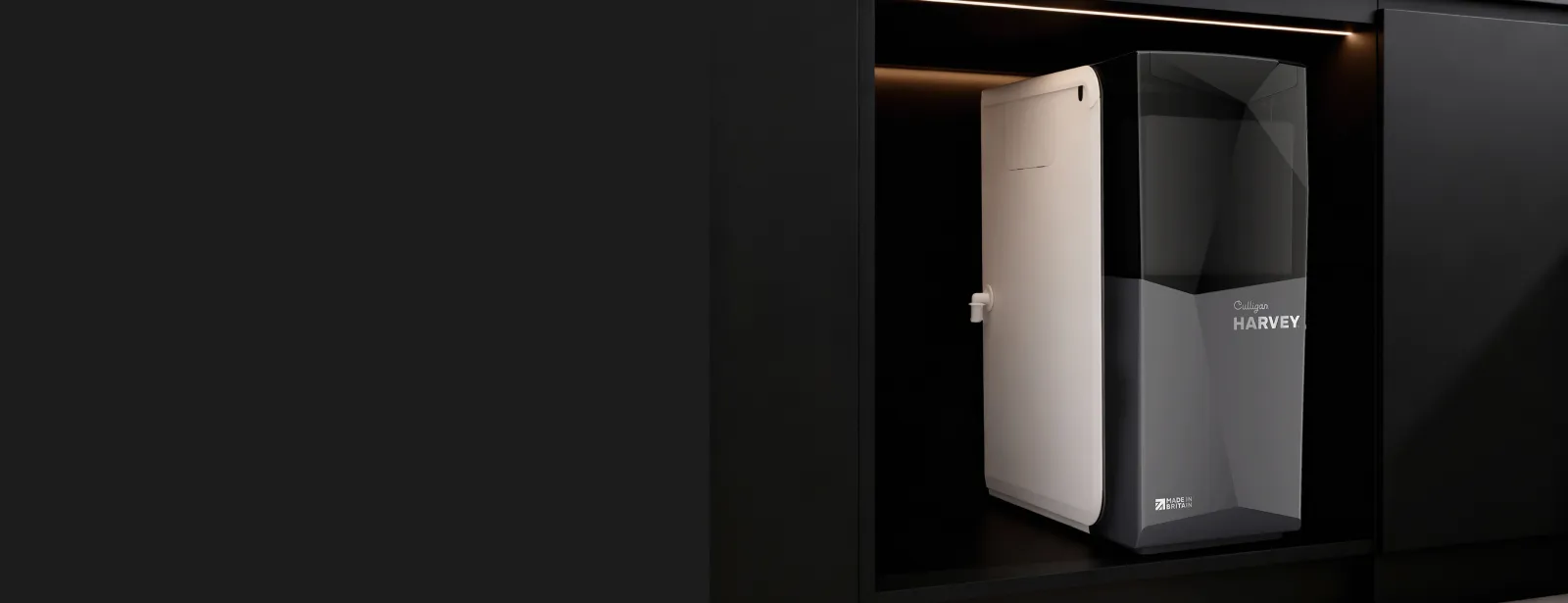

Water Softeners for UK Homes
Say goodbye to limescale in your home with Harvey water softeners. British-made water softeners that solve hard water problems at the source.
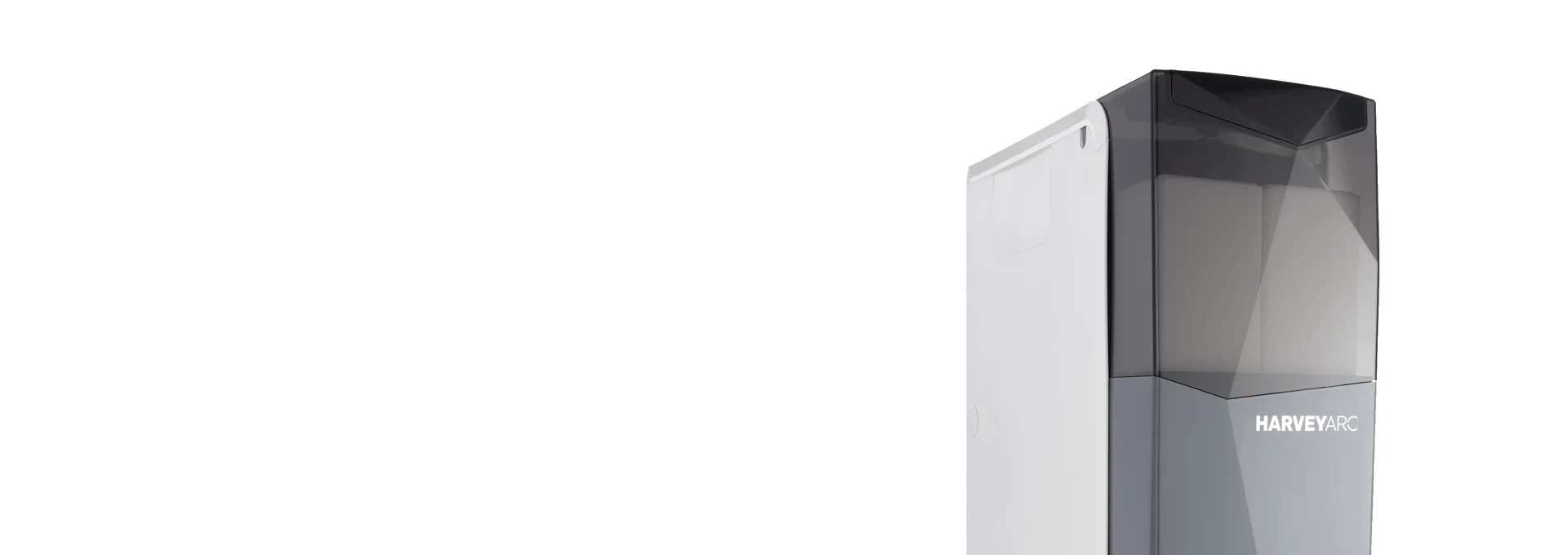

Enjoy gleaming surfaces and appliances with a Harvey water softener. Banish limescale around your home.
- Smooth running & stain free appliances
- Sparkling clean bathrooms
- Gleaming, stain-free surfaces
£100 Off a Water Softener T&C’s apply

Finance available – Rep APR 0%
Uninterrupted soft water
Quality assurance
Made In Britain
Household Water Softener Systems
Let us help you find the perfect home water softener. Explore our selection of high-quality water softeners for homes designed for superior performance and efficiency.

What is a Water Softener?
A water softener is designed to reduce the hardness minerals in your water before they travel around your home. These minerals, mainly calcium and magnesium, are what cause limescale build-up on taps, shower screens, kettles, appliances and pipework.
By tackling hard water at source, a water softener helps protect your home from limescale and makes everyday tasks, such as cleaning, washing and showering, feel easier.

Twin cylinder
How Does a Water Softener Work?
A water softener removes limescale-causing minerals like calcium and magnesium using a process called ion exchange. Hard water passes through resin beads that attract these minerals, replacing them with sodium ions to produce softened water throughout your home.
Culligan Harvey water softeners use a twin-cylinder, non-electric design, so one cylinder is always softening your water while the other regenerates. This means 24/7 softened water with no interruption, efficient salt use, and low running costs.

Types of Water Softeners
Not all systems work in the same way. Some products are true water softeners, while others are conditioners or filters designed for different purposes.
1) Salt-based water softeners
Use ion exchange to reduce the minerals that cause hard water. Culligan Harvey systems fall into this category.
2) Salt-free conditioners
Do not usually remove hardness minerals. Instead, they are generally designed to alter how minerals behave in the water.
3) Single-cylinder or electric softeners
Some systems use one cylinder and may rely on electrical controls. Depending on the product, softened water may pause during regeneration.

Benefits of a Water Softener
Softened water can make a noticeable difference across the home, especially in hard water areas.
Less limescale around the home
A water softener helps reduce the minerals that cause limescale, supporting cleaner-looking taps, shower screens and appliances.
Softer-feeling showers and baths
Softened water can help soaps, shampoos and body washes lather and rinse more easily, which may leave skin and hair feeling softer.
Support for appliances
Reducing limescale can help protect appliances such as kettles, dishwashers and washing machines from hard-water build-up.
Potential savings over time
Softened water may help reduce spend on descaling products, cleaning products and detergent, although actual savings vary by household.

How a Water Softener Can Improve Your Hair and Skin
Hard water can leave mineral deposits on your hair and skin, making it harder for shampoos and soaps to rinse away completely. Over time, this can leave hair feeling dry and dull, while skin may feel less soft and refreshed.
By removing excess minerals from your water supply, a water softener helps create a gentler washing experience. Many homeowners notice softer-feeling skin, more manageable hair, and improved lather from their favourite soaps and shampoos.

Is your water hard?
Hard water affects many UK households. If you see limescale on taps, cloudy marks on glass, residue in the shower or build-up in your kettle, your home may be in a hard water area.
Use our water hardness checker to find out how hard your local water is, then request a quote to understand which Culligan Harvey system could be right for your home.
How Hard Is Your Water?

100
200
300
Soft
Hard
00.00
parts per million* Unfortunately we do not have data for your area but you could still benefit from a water softener.
Enter your postcode to check the hardness of the water in your area
Are these hard water issues familiar to you?

Clogged shower head

Stained kettles and coffee machines

Stained bathroom surfaces

Frequent maintenance of washing machines

Rough hair and skin

Is softened water safe to drink?
Softened water is generally suitable for most adults, but many ion-exchange softener installations keep an unsoftened drinking water tap for drinking and cooking. This can be especially relevant for baby formula or where sodium intake is a consideration.
How to Choose the Right Water Softener?
The best water softener for your home depends on:
- How many people live in your home
- How many bathrooms you have
- Your water hardness level
- Your daily water usage
- The space available for installation
- Whether you want app-based salt monitoring
- Your budget and preferred payment option
Culligan Harvey can help you compare models and choose a system that suits your home.
Peace of Mind
90-Day money back guarantee* on our water softeners, because we are confident you’ll love it
Delivery & Installation
Fitted by a Culligan expert, typically within half a day, with no extra charge for additional time needed
Worry-free maintenance
A Culligan expert water softener technician provides your annual maintenance

HarveyArc Water Softener
The First Eco-Friendly Water Softener System Made in Britain
Unlike chemical products that may provide a temporary fix to hard water issues, our water softeners use a unique ion exchange process to remove the minerals that cause limescale, ensuring your home benefits from water that is truly softened.
Eco-friendly cabinet
Our cabinet is made from 62% recycled plastic from a clean source.
24/7 Softened water
Our parallel system means both cylinders are in continuous use, so no water is left sitting in a cylinder.
Food-Grade resin beads
Made with advanced resin bead formula
Made to British Standards
Tested to over 1 million cycles, to be robust and reliable.
Limescale cost calculator
Calculate the cost of limescale in your home
Fill the information below to find out how much limescale costs you!
The surface area of your home:
0 m²
Your energy budget:
(electricity + gas)
(electricity + gas)
0 £/month
Your shopping budget:
(food + cleaning products)
(food + cleaning products)
0 £/month
Limescale costs you every year…
£ 0
That is £ 0 over 10 years £ 0
Cost of damage to your household appliances and pipes
£ 0
Excessive energy consumption to heat your water loaded with limescale
£ 0
Overuse of cleaning products to clean your home and moisturize your skin dried out by limescale
The Culligan Harvey Arc water softener: the anti-limescale solution for softer water that’s easier on your budget.
Free water test & soft water demo — no obligation!
Key Features of a Culligan Harvey Water Softener
Whole house softening
Connected to your mains water supply, softening all water in your home.
Twin Cylinder
24/7 uninterrupted flow of softened water.
Parallel flow
The duplex parallel method uses both cylinders, to provide 24/7 softened water.
Non-electric
Powered by your own water pressure saving energy. No timers or complicated programming.
Ultra-fine resin beads
Using the highest grade resin allows more efficient capture of limescale particles.
Low running costs
Regenerates based on demand, using less water and salt than other devices.
Quality Assurance
With a dedicated UK R&D factory, we test to the British water regulation standards.
Qualified plumbers
Our Culligan Harvey’s Academy Training course is designed specifically for water
Made In Britain
Our water softeners have been manufactured in the UK since 2006. We invest £1 million yearly in R&D to ensure product quality.

Installation
Experienced water softener installers
Our friendly installation experts are qualified plumbers who have undertaken extensive training so that your water softener is installed perfectly.
Our team is proud of its first-time fit rate to ensure that your softener is installed by our friendly experts and you can rely on our helpful aftercare to answer any questions you may have.

Join thousands of happy customers


Great installation experience
Great installation experience. Very professional service.
Jason, 10 October 2026
I would like to say a big thank you to…
I would like to say a big thank you to Rhys for doing an excellent job. He was polite,helpful and professional. Would highly recommend.
Chris brydon, 10 October 2026
The lift was not working and Stuart…
The lift was not working and Stuart kindly carried the salt up three flights of stairs,if we had ordered through Amazon it would have been left downstairs,
Roger, 9 October 2026
For over 40 years Iv had a water…
For over 40 years Iv had a water softener machine were salt tablets. Now I have block salt. A water filter. There was a bleep with the ordering system. When I called the company about the situation. It was dea...
Dear Mrs Maria Ann Gordon, 9 October 2026
Excellent demo
Excellent demo delivered by David Griffiths which even included a dummy unit that showed how easy it would be to fit a water softener in our cupboard. Informative, efficient and detailed.
Paul Davies, 9 October 2026
Great delivery
The delivery was good and the driver was really polite and helpful
Visweswar Nagella, 9 October 2026
Water Softeners - FAQ
A water softener is a system that removes hardness minerals, mainly calcium and magnesium from your water supply. Harvey Water Softeners do this using a non-electric, twin-cylinder design that ensures you always have soft water, even during regeneration.
Fitting a Water Softener is a job best handled by a qualified plumber or Harvey-approved installer. The unit is usually installed at the point where the water supply enters your home, ensuring all your water is softened straight from the source.
The most effective way to soften hard water in the UK is by installing a Harvey Water Softener. It automatically removes hardness minerals from your mains supply, providing soft water to every tap in your home.
Water Softeners are connected at the point where your mains water enters the home. It’s best to use a Harvey-approved installer to ensure the system is properly plumbed and functions efficiently.
Harvey Water Softeners are designed to be low-maintenance and don’t require regular servicing. The only routine task is replacing the salt blocks, which is quick and easy. However, we offer servicing options and customer support if you ever need help.
Yes, absolutely! If you live in a hard water area, a water softener can protect your appliances, reduce limescale, and improve water quality throughout your home.
Water softener cost depends on the model, installation requirements, household size and any service or care plan. The most accurate way to understand the cost for your home is to request a personalised quote.
Softened water is generally suitable for most adults, but many installations keep an unsoftened drinking water outlet for drinking and cooking.
A salt-based water softener reduces hardness minerals through ion exchange. Salt-free conditioners usually do not remove hardness minerals, so they may not provide the same whole-home softening effect.
A water softener helps stop new limescale from forming where softened water is supplied and may help reduce existing scale build-up gradually over time.
A water softener may be removable and reinstallable if professionally disconnected and if the new property is suitable. This should be checked before making plans to move the system.
*Water softener installed by our qualified engineer supplying all mains water throughout the home through a regularly maintained Harvey water softener that uses Harvey high grade salt.


