Best Water Softener for Your Beauty Routine: 5 Reasons Soft Water Can Help Skin and Hair
28 August 2026

In summary
When your skin feels dry or tight after a shower, or your hair looks dull and difficult to manage, the water flowing through your bathroom can be part of the problem. In many UK homes, hard water contains dissolved calcium and magnesium minerals. These minerals interact with soaps, shampoos and cleansers, reducing lather and making residue harder to rinse away.
A Culligan Harvey water softener removes hardness minerals through ion exchange before the water reaches your shower, bath or basin. Softer water allows beauty products to spread, lather and rinse more easily, which may leave skin feeling more comfortable and hair feeling smoother and easier to manage.
For a beauty routine, the advantages go beyond one showerhead. A compact twin-cylinder Harvey system can supply softened water throughout the home without pausing during regeneration. Results vary from person to person, and softened water is not a treatment for eczema or another medical condition, but it can remove a common source of mineral and soap residue from your daily routine.

Hard water can strip natural oils from skin and hair
The phrase “strip natural oils” is often used to describe the hard water effects on skin and hair. The everyday process is more specific: calcium and magnesium react with soaps and shampoos, creating deposits that do not dissolve or rinse away as readily as they do in soft water.
On your skin, that combination of mineral and cleanser residue can contribute to the dry, tight feeling that sometimes appears after washing. On your hair, deposits can collect along the strands and around the scalp, leaving hair feeling rough, flat, dull or weighed down. Adding more cleanser may create a cycle in which you wash more aggressively without achieving the clean-rinsed feeling you want.
Softened water removes the hardness minerals before they enter the bathroom. Soap and shampoo can then lather and rinse more effectively, so there is less residue competing with the oils and conditioning ingredients that help skin and hair feel comfortable. Learn more about keeping hair healthy with soft water and recognising the everyday signs of mineral build-up.
You may notice the difference most clearly after bathing: skin can feel clean without the same chalky or tight finish, while hair may feel lighter at the roots and less coated through the lengths. Soft water does not replace moisturiser, conditioner or a routine suited to your skin and hair type. It gives those products a cleaner starting point.
Soft water can support a gentler skin routine
A carefully chosen cleanser can still leave residue when it is used with hard water. This is especially relevant for people whose skin already feels dry or reactive, because repeated washing exposes the skin to both the cleanser and the minerals in the water.

In a controlled study of adults with and without atopic dermatitis, researchers found that washing with hard water increased deposits of the surfactant sodium lauryl sulphate on the skin. Those deposits were associated with greater water loss from the skin and more irritation, while ion-exchange softening reduced the effects. The study supports a cautious, practical conclusion: reducing hardness can help reduce the amount of wash-product residue left behind.
With soft water, a small amount of cleanser often spreads more easily and rinses away with less effort. You may be able to avoid repeated washing or vigorous rubbing simply to remove a stubborn film. That can make showers, face washing and shaving feel gentler, particularly when you also use lukewarm water and products designed for sensitive skin.
Softened water should not be described as a cure for eczema. A UK multicentre randomised trial of water softeners for childhood eczema found no additional objective improvement over usual eczema care. Anyone managing eczema or persistent irritation should continue following advice from a healthcare professional. The beauty benefit of soft water is narrower: it may reduce hard-water and cleanser residue that can make skin feel less comfortable.
Hair can feel smoother, shinier and easier to manage
Hair is exposed to the same water every time you shampoo, condition, rinse or refresh a style. In hard water areas, repeated washing can leave calcium and magnesium deposits on the hair shaft. Laboratory research has observed greater mineral deposition on hair washed in hard water, although evidence that hard water directly weakens hair structure is mixed. The most responsible claim is about how hair feels and behaves, rather than a guarantee that soft water repairs damage.

Mineral build-up can make the cuticle surface feel rougher and can stop hair from reflecting light as evenly, which may contribute to a dull appearance. It can also make shampoo harder to distribute and conditioner harder to rinse cleanly. The result may be hair that feels dry at the ends, heavy at the roots or more difficult to detangle and style.
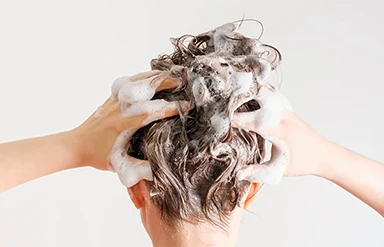
Soft water reduces that mineral load. Shampoo can foam and move through the hair more readily, while conditioner can be applied without fighting the same chalky residue. After rinsing, hair may feel softer, smoother and more flexible, with a natural shine that is easier to see when the strands are not coated.

The transition can take a little adjustment. Hair that has been washed in hard water for years may need several washes before old product and mineral build-up are reduced. You may also discover that the amount of shampoo or conditioner you previously used is now more than you need.
Beauty products can work harder in soft water
Premium shampoo, face wash and body products are formulated to cleanse, condition or moisturise. Hardness minerals can interfere with that experience by reducing lather and leaving soap scum behind. Soft water helps the same products foam, spread and rinse more easily, so you can focus on the formula itself rather than compensating for the water.
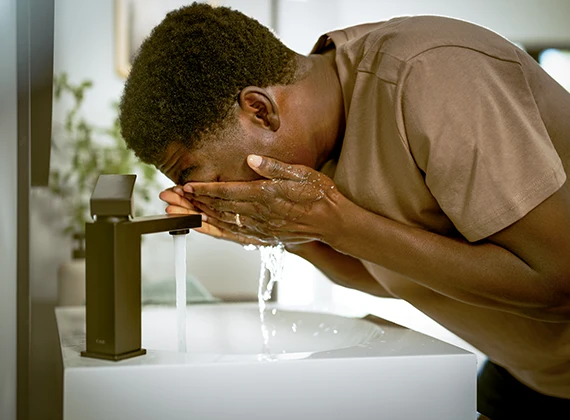
You may notice the difference across several parts of your routine:
Shampoo and conditioner
Start with less than your usual amount. Soft water generally creates lather more quickly, and conditioner may distribute more evenly through the lengths.
Face and body cleansers
A smaller amount may cover the same area, and cleaner rinse-off can reduce the urge to wash twice or scrub at lingering residue.
Shaving products
Soaps, creams and gels can produce a richer lather, helping the razor glide without repeatedly applying more product.
Bath products
Bubble bath and foaming products can produce more suds with less product because they are not reacting with the same concentration of hardness minerals.
More lather does not automatically mean better cleansing, so the goal is not to create the largest possible amount of foam. Use the smallest amount that cleans effectively and adjust your routine over the first few weeks. This can help products last longer and prevent hair or skin from feeling overloaded.
The slightly silky feeling of soft water can also surprise first-time users. It does not mean soap remains on your skin. Without the calcium and magnesium deposits associated with hard-water washing, you are more likely to feel your skin and its natural oils rather than a dry layer of mineral residue. The wider benefits of a water softener include easier lathering throughout the bathroom and the rest of the home.
A compact whole-home solution for modern living
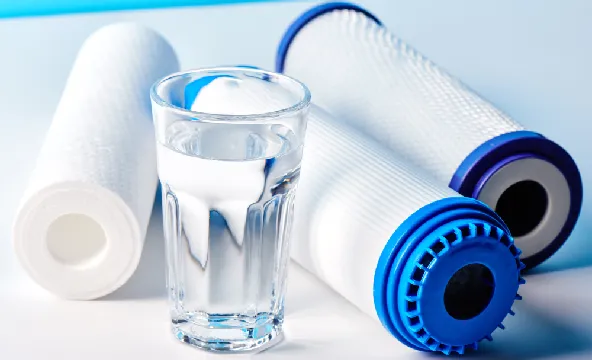
A shower attachment, water filter for tap water or drinking water tap treats a single outlet and may not remove the calcium and magnesium responsible for hardness. A true water softener works at the point where water enters the home, treating the supply before it reaches showers, baths, basins, the washing machine and other appliances.
That whole-home approach is useful for a beauty routine because the results are consistent. You do not have to remember which shower has a filter or rely on a small cartridge to handle the demands of an entire household. The water used to wash your face in the morning, shower after exercise and rinse your hair at night has been softened at source.
The HarveyArc water softener is designed for UK homes, with a compact footprint that fits beneath many kitchen sinks, depending on the plumbing layout. Its twin-cylinder system keeps softened water flowing while the unit regenerates, so the household does not receive an interval of hard water during a busy morning or evening routine. It is also non-electric, which keeps operation simple.
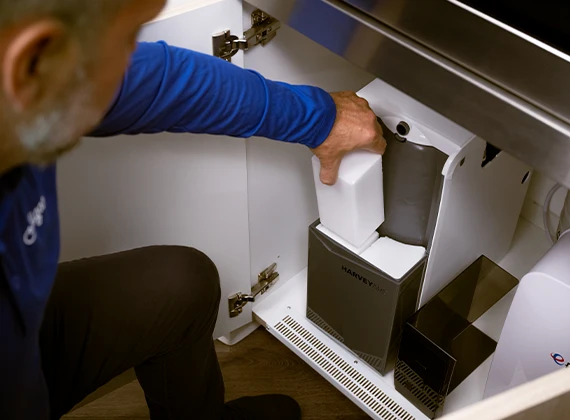
When comparing the best water softener for hair, skin and the wider home, look beyond the initial water softener system cost. A suitable system should match your household size, water hardness, available installation space and peak water demand. Useful features include:
Genuine ion-exchange softening
The system should remove hardness minerals rather than simply claim to alter or condition them.
Continuous softened water
A twin-cylinder design avoids the hard-water breakthrough that can occur when a single cylinder regenerates.
A practical fit
Compact dimensions matter in UK kitchens, but a professional plumbing survey should confirm the right position and installation route.
Clear drinking-water arrangements
A water softener is different from water filtration for a tap. The Drinking Water Inspectorate advises retaining an unsoftened supply for drinking and cooking when an ion-exchange softener is installed.
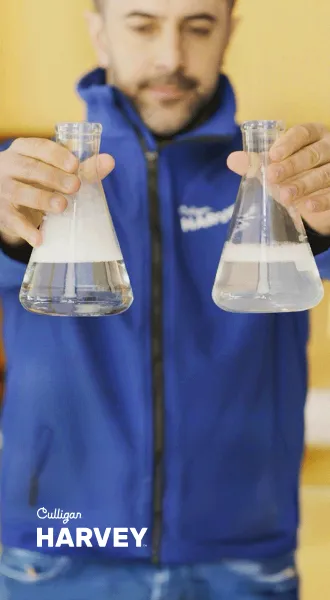
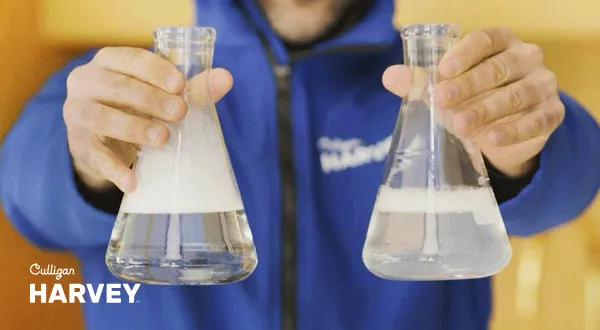
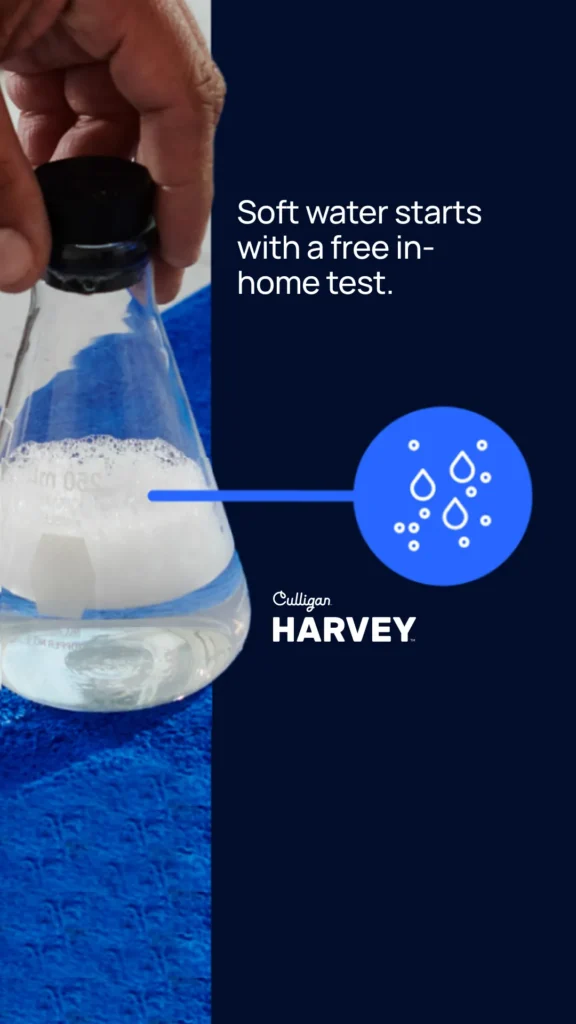
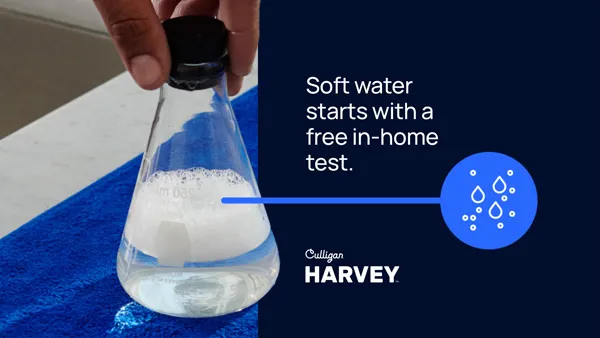
A personalised assessment is the simplest way to understand placement, performance and water softener cost for your home. Book a free, no-obligation Culligan Harvey demonstration to have your water hardness tested, compare hard and soft water and receive an installation plan. The right system can support a more comfortable beauty routine while also reducing limescale and improving how water performs throughout the home.